
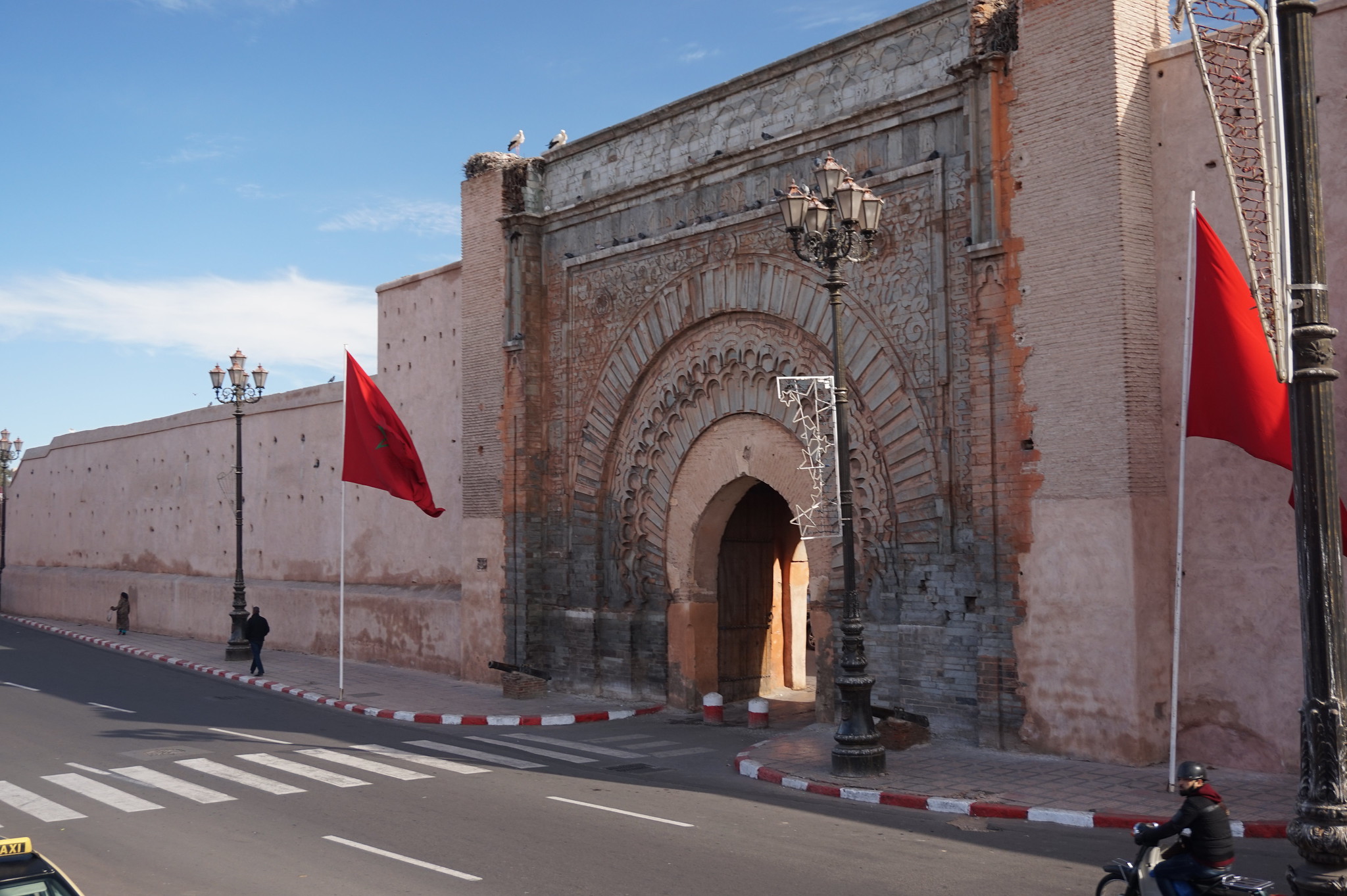
Bab Agnaou stands as a testament to the rich architectural heritage of Marrakech’s old city, captivating visitors with its imposing presence and intricate design. This iconic gateway, one of the nineteen gates that punctuate the ancient walls of the medina, holds a special place in the hearts of locals and tourists alike. Its architectural significance goes beyond mere aesthetics, offering a glimpse into the historical and cultural tapestry of Morocco.
Built in the 12th century during the Almohad dynasty, Bab Agnaou serves as the main entrance to the royal kasbah in the southern part of the medina. The gate’s name, which translates to “gate of the black people” or “gate of the gnawa,” hints at its possible connection to sub-Saharan African influences or the gnawa musical tradition. Whatever the origin of its name, there’s no denying the gate’s striking appearance and the skill of the artisans who crafted it.
The first thing that catches the eye is the gate’s distinctive horseshoe arch, a hallmark of Islamic architecture. This elegant curve is framed by intricately carved stonework, featuring geometric patterns and calligraphy that showcase the mastery of Moroccan craftsmen. The use of local blue-grey marble adds to the gate’s grandeur, creating a stark contrast against the ochre-colored walls that surround it.
As you approach Bab Agnaou, you’ll notice the subtle details that make it a masterpiece of Moorish design. The gate is adorned with decorative elements typical of Islamic art, including floral motifs and arabesque patterns. These intricate designs not only serve an aesthetic purpose but also carry deep symbolic meanings, reflecting the spiritual and cultural values of the time.
One of the most fascinating aspects of Bab Agnaou is how it seamlessly blends form and function. While its ornate facade speaks to its ceremonial importance, the gate was also designed with defense in mind. The thick walls and strategic placement within the city’s fortifications highlight the dual nature of many structures in medieval Islamic cities.
The architectural significance of Bab Agnaou extends beyond its individual beauty. It serves as a prime example of the Almohad style, which flourished in North Africa and parts of Spain during the 12th and 13th centuries. This style is characterized by its simplicity, geometric precision, and the use of local materials – all of which are evident in Bab Agnaou’s design.
Moreover, the gate acts as a living link to Marrakech’s past, offering insights into the city’s evolution over the centuries. It stands as a reminder of the power and sophistication of the Almohad empire, which made Marrakech its capital and left an indelible mark on the city’s architecture.
Today, Bab Agnaou continues to play a vital role in the urban fabric of Marrakech. It serves not only as a popular tourist attraction but also as a functional passageway for locals going about their daily lives. This juxtaposition of old and new, of historical significance and everyday utility, is part of what makes the gate so fascinating.
As you stand before Bab Agnaou, it’s impossible not to feel a sense of awe at the skill and vision of those who built it nearly a millennium ago. The gate’s enduring beauty and structural integrity are a testament to the ingenuity of medieval Islamic architects and the timeless appeal of their designs.
In a city known for its vibrant souks, bustling squares, and ornate palaces, Bab Agnaou holds its own as a must-see landmark. Its architectural significance lies not just in its physical beauty, but in the stories it tells and the connections it forges between past and present. As Marrakech continues to evolve, Bab Agnaou stands as a proud reminder of the city’s rich architectural heritage and the enduring legacy of Islamic design.
Bab Agnaou, one of the nineteen gates of Marrakech, Morocco, stands as a testament to the city’s rich history and architectural heritage. Built in the 12th century during the Almohad dynasty, this imposing gate serves as a grand entrance to the medina’s royal kasbah. Its distinctive horseshoe-shaped arch, adorned with intricate Islamic calligraphy and geometric patterns, exemplifies the sophisticated craftsmanship of medieval Moroccan artisans. Despite the passage of time, Bab Agnaou continues to captivate visitors and locals alike, serving as a tangible link to Marrakech’s glorious past and a symbol of the enduring cultural legacy of the region.