
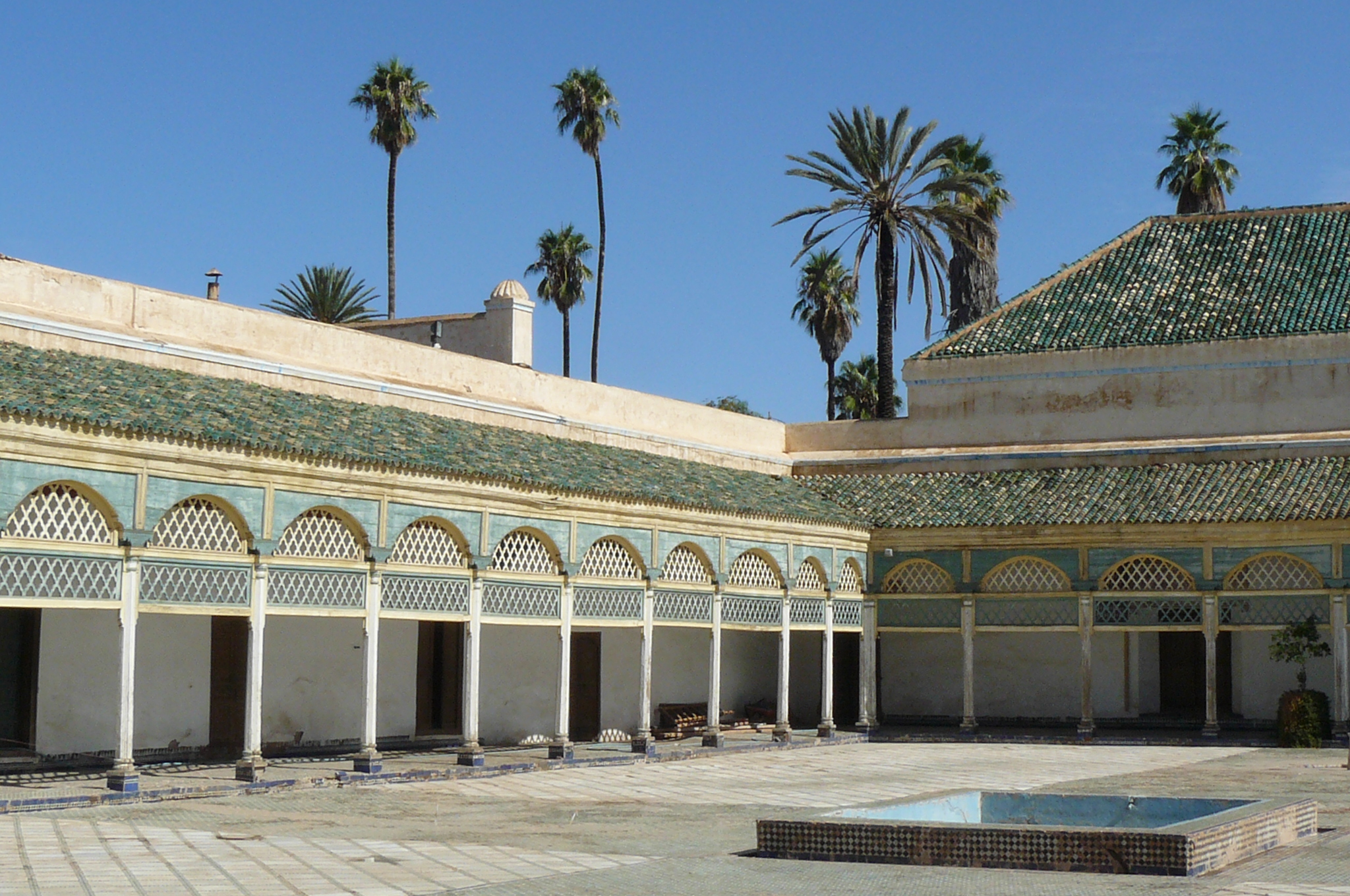
The Bahia Palace in Marrakech, Morocco, is a stunning example of 19th-century Moroccan architecture, but it’s the intricate zellige tilework that truly captivates visitors. Zellige, a form of Islamic geometric tilework, is a hallmark of Moroccan design, and the Bahia Palace showcases some of the finest examples of this art form.
As you wander through the palace’s many rooms and courtyards, you’ll find yourself surrounded by a dazzling array of colorful patterns and designs. The zellige tilework at Bahia Palace is a testament to the skill and patience of the artisans who created it, with each tiny piece of tile carefully cut and placed to form complex geometric patterns.
The process of creating zellige is both time-consuming and labor-intensive. Artisans start by shaping small pieces of glazed terracotta into various geometric shapes, such as stars, squares, and triangles. These pieces are then carefully arranged and set into plaster to create intricate patterns. The result is a mesmerizing display of color and symmetry that seems to dance before your eyes.
One of the most impressive features of the zellige at Bahia Palace is the sheer variety of designs on display. Each room and courtyard boasts its own unique patterns, ranging from simple repeating motifs to complex, star-based designs that seem to stretch into infinity. The colors used in the tilework are equally diverse, with rich blues, greens, and yellows complementing the more subdued earth tones.
As you explore the palace, you’ll notice that the zellige isn’t confined to just the walls. It also adorns fountains, archways, and even ceilings, creating a sense of continuity and harmony throughout the space. This all-encompassing approach to decoration is a hallmark of Islamic art, which seeks to create environments that are both beautiful and spiritually uplifting.
One particularly stunning example of zellige at Bahia Palace can be found in the grand courtyard. Here, the tilework creates a mesmerizing interplay of light and shadow, with sunlight filtering through the intricate patterns to cast ever-changing designs on the ground. It’s a sight that has captivated visitors for generations and continues to inspire awe in those who see it today.
The zellige at Bahia Palace isn’t just beautiful; it’s also deeply symbolic. Many of the patterns used in Islamic art, including those found in zellige, are based on mathematical principles and are believed to represent the infinite nature of God. The repetition of these patterns is thought to induce a meditative state, allowing viewers to contemplate the divine.
Despite its age, the zellige at Bahia Palace remains in remarkably good condition, a testament to both the skill of its creators and the ongoing efforts to preserve this important piece of Moroccan heritage. Restoration work is carried out regularly to ensure that future generations can continue to marvel at this extraordinary example of Islamic art.
As you leave Bahia Palace, you’ll likely find yourself with a newfound appreciation for the art of zellige. The intricate patterns and vibrant colors stay with you long after you’ve left, serving as a lasting reminder of the beauty and complexity of Moroccan art and architecture.
Whether you’re an art enthusiast, a history buff, or simply someone who appreciates beautiful things, the zellige tilework at Bahia Palace is sure to leave a lasting impression. It’s a vivid example of the rich cultural heritage of Morocco and a testament to the enduring power of art to inspire and amaze.
The Bahia Palace stands as a testament to Morocco’s rich architectural heritage and the opulence of 19th-century Moroccan nobility. Its intricate tilework, ornate ceilings, and lush gardens exemplify the finest craftsmanship of the era. The palace not only serves as a popular tourist attraction but also provides valuable insights into the cultural, social, and political dynamics of 19th-century Morocco. As a blend of Islamic and Moroccan styles, the Bahia Palace continues to inspire architects and artists while preserving an important chapter in the country’s history for future generations.