
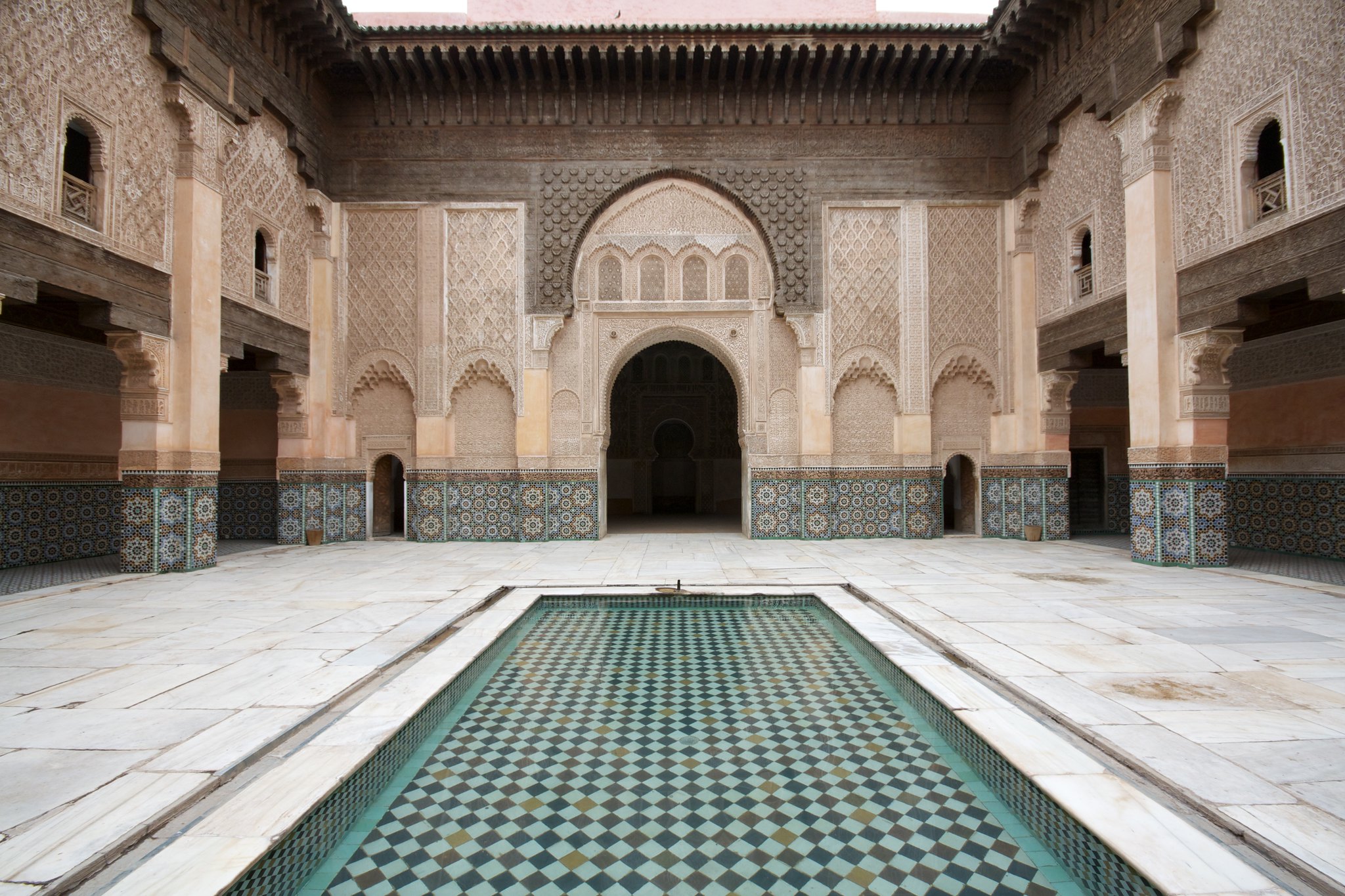
Nestled in the heart of Marrakech’s bustling medina, the Ben Youssef Madrasa stands as a testament to the exquisite craftsmanship and architectural prowess of Morocco’s Islamic golden age. This former Islamic college, founded in the 14th century and rebuilt in the 16th century, is a mesmerizing display of intricate Islamic architecture that continues to captivate visitors from around the world.
As you step through the ornate entrance of the madrasa, you’re immediately transported to a world of geometric precision and artistic splendor. The central courtyard, with its gleaming marble floor and tranquil reflecting pool, serves as the focal point of the complex. Surrounding this serene space are walls adorned with a dizzying array of decorative elements that showcase the pinnacle of Moroccan artistry.
One of the most striking features of the Ben Youssef Madrasa is its elaborate use of zellij, the colorful mosaic tilework that is synonymous with Moroccan architecture. These intricate patterns, composed of thousands of hand-cut tiles, create a kaleidoscope of colors and shapes that seem to dance across the surfaces. The precision with which these tiles are arranged is nothing short of awe-inspiring, with each piece fitting perfectly into place to form complex geometric designs.
Moving your gaze upward, you’ll find yourself marveling at the intricately carved cedar wood ceilings and cornices. These wooden elements, known as muqarnas, create a honeycomb-like effect that adds depth and dimension to the space. The level of detail in these carvings is astounding, with each tiny niche and recess carefully crafted to catch the light and cast mesmerizing shadows throughout the day.
As you explore the madrasa further, you’ll encounter countless examples of Arabic calligraphy adorning the walls and archways. These beautifully rendered inscriptions, often verses from the Quran or poetic phrases, serve both a decorative and spiritual purpose. The flowing lines of the script blend seamlessly with the geometric patterns surrounding them, creating a harmonious fusion of word and image.
The upper floors of the madrasa house the former student dormitories, where aspiring scholars once lived and studied. These small, austere rooms provide a stark contrast to the opulence of the courtyard and main halls, offering a glimpse into the daily lives of the students who called this place home. Despite their simplicity, even these modest spaces feature touches of decorative elements, such as carved plaster work around the windows and doorways.
One of the most captivating aspects of the Ben Youssef Madrasa’s architecture is the way it plays with light and shadow. The intricate latticework of the windows and screens creates ever-changing patterns as sunlight filters through, casting delicate shadows across the floors and walls. This interplay of light and dark adds a dynamic quality to the space, making each visit a unique experience depending on the time of day and season.
As you wander through the madrasa, it’s impossible not to be struck by the sheer level of craftsmanship and attention to detail that went into its construction. Every surface, from the floors to the ceilings, is a canvas for artistic expression, with no space left unadorned. This commitment to beauty and intricacy is a hallmark of Islamic architecture, reflecting the belief that the creation of beauty is a form of worship in itself.
The Ben Youssef Madrasa stands not only as a stunning example of Islamic architecture but also as a window into Morocco’s rich cultural heritage. Its intricate designs and masterful craftsmanship continue to inspire and amaze visitors, offering a glimpse into the artistic and intellectual achievements of a bygone era. As you leave this architectural marvel, you can’t help but feel a sense of wonder at the enduring power of human creativity and the timeless beauty of Islamic art.