
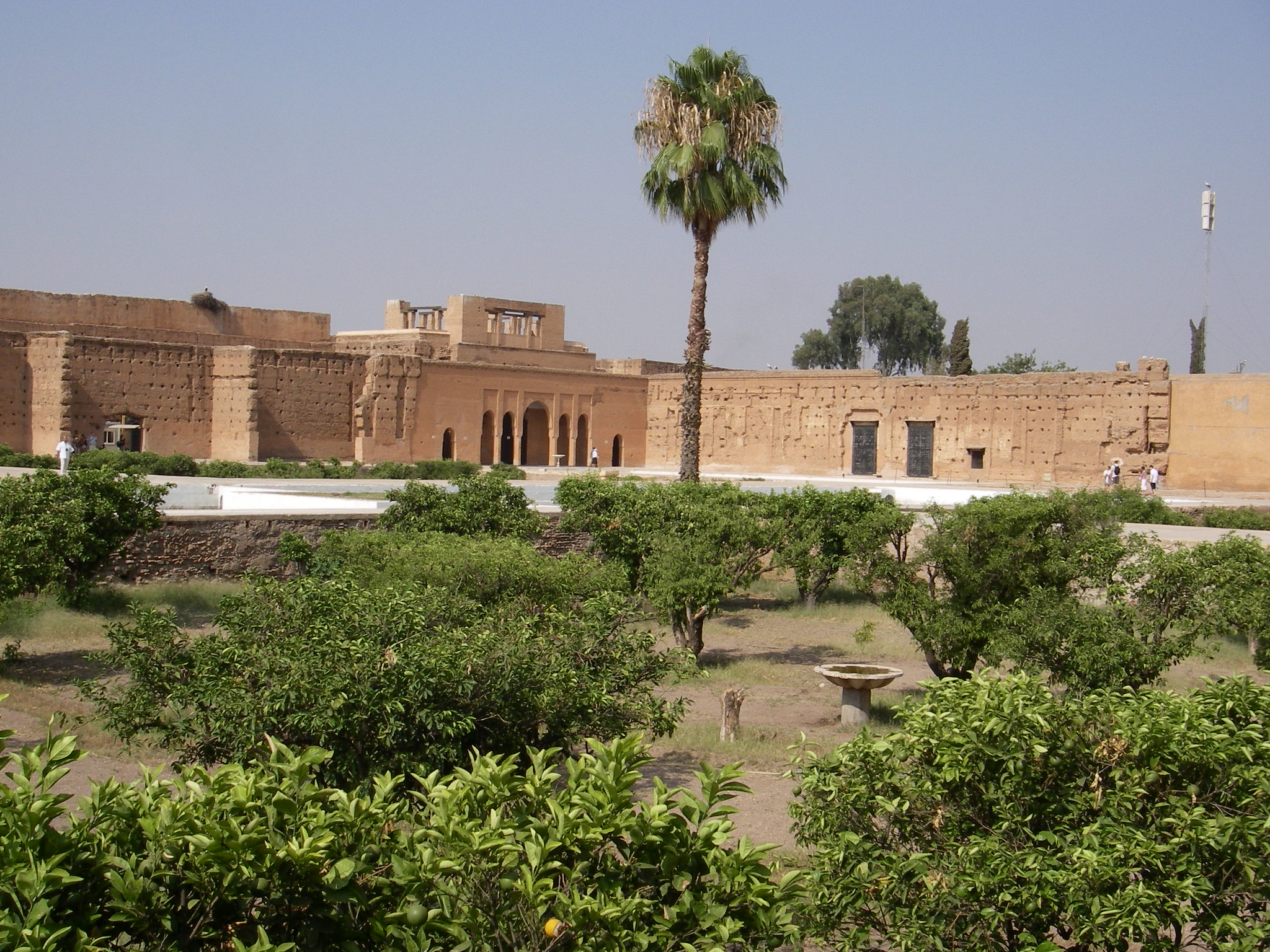
Nestled in the heart of Marrakech, Morocco, lies a testament to the grandeur of a bygone era – El Badi Palace. This once-magnificent structure, now a captivating ruin, continues to mesmerize visitors with its sheer scale and architectural brilliance. As you step through its imposing gates, you’re immediately transported back in time to the 16th century, when Sultan Ahmad al-Mansur commissioned this lavish palace to showcase the wealth and power of his Saadian dynasty.
The name “El Badi” translates to “The Incomparable,” and it’s easy to see why. Upon entering the vast courtyard, you’re greeted by an expanse of intricate tilework, crumbling walls, and the remnants of what was once a spectacular complex. The palace’s original layout included 360 rooms, a grand courtyard, and a pool that was said to have been filled with mercury. While much of its former glory has faded, the sheer size of the ruins gives visitors a sense of the palace’s original splendor.
As you wander through the grounds, you’ll notice the clever use of symmetry in the palace’s design. Four sunken gardens flank the central courtyard, each representing the four corners of the Islamic empire. These gardens, once lush with exotic plants and trees, now stand as silent witnesses to the passage of time. Despite their current state, it’s not hard to imagine the opulence that once graced these spaces, with fountains bubbling and the air filled with the scent of orange blossoms.
One of the most striking features of El Badi Palace is its innovative use of water. The Saadians were masters of hydraulic engineering, and this expertise is evident in the complex system of channels and pools that crisscross the palace grounds. These waterways not only served a practical purpose in irrigating the gardens but also created a cooling effect in the scorching Moroccan heat. Today, you can still see the outlines of these channels, offering a glimpse into the ingenuity of the palace’s designers.
As you explore further, you’ll come across the remains of the palace’s hammam, or bathhouse. This area, once adorned with intricate mosaics and marble, was an essential part of daily life in the palace. The hammam’s domed ceilings and steam rooms speak to the importance of cleanliness and relaxation in Islamic culture. While much of the original decoration has been lost to time, the structure itself remains a fascinating example of Moroccan bathhouse architecture.
Perhaps the most impressive feature of El Badi Palace is its use of materials. The Saadians spared no expense in constructing this masterpiece, importing marble from Italy, gold from Sudan, and precious woods from as far away as India. This eclectic mix of materials reflects the far-reaching trade networks of the Saadian Empire and the sultan’s desire to create a truly unique and awe-inspiring palace.
As you climb to the top of the palace walls, you’re rewarded with a breathtaking view of Marrakech. From this vantage point, it’s easy to imagine the palace in its heyday, towering over the city as a symbol of power and prestige. Today, the ruins of El Badi Palace stand as a poignant reminder of the transient nature of empires and the enduring legacy of great architecture.
While El Badi Palace may no longer shine with its original splendor, its crumbling walls and echoing courtyards continue to captivate visitors from around the world. As you leave the palace grounds, you can’t help but feel a sense of wonder at the architectural achievements of the past and the stories that these ancient stones continue to tell.
El Badi Palace, once a magnificent symbol of Moroccan power and wealth, now stands as a haunting reminder of the transient nature of glory. Built in the 16th century by Sultan Ahmad al-Mansur, the palace’s ruined state offers visitors a glimpse into its former grandeur. Despite its decay, the remaining structures and intricate details continue to captivate tourists and historians alike.
The palace serves as a testament to the rich cultural heritage of Marrakech and the Saadian dynasty, while also prompting reflection on the impermanence of human achievements. As an important historical site, El Badi Palace continues to play a significant role in preserving Morocco’s architectural legacy and attracting visitors from around the world.