
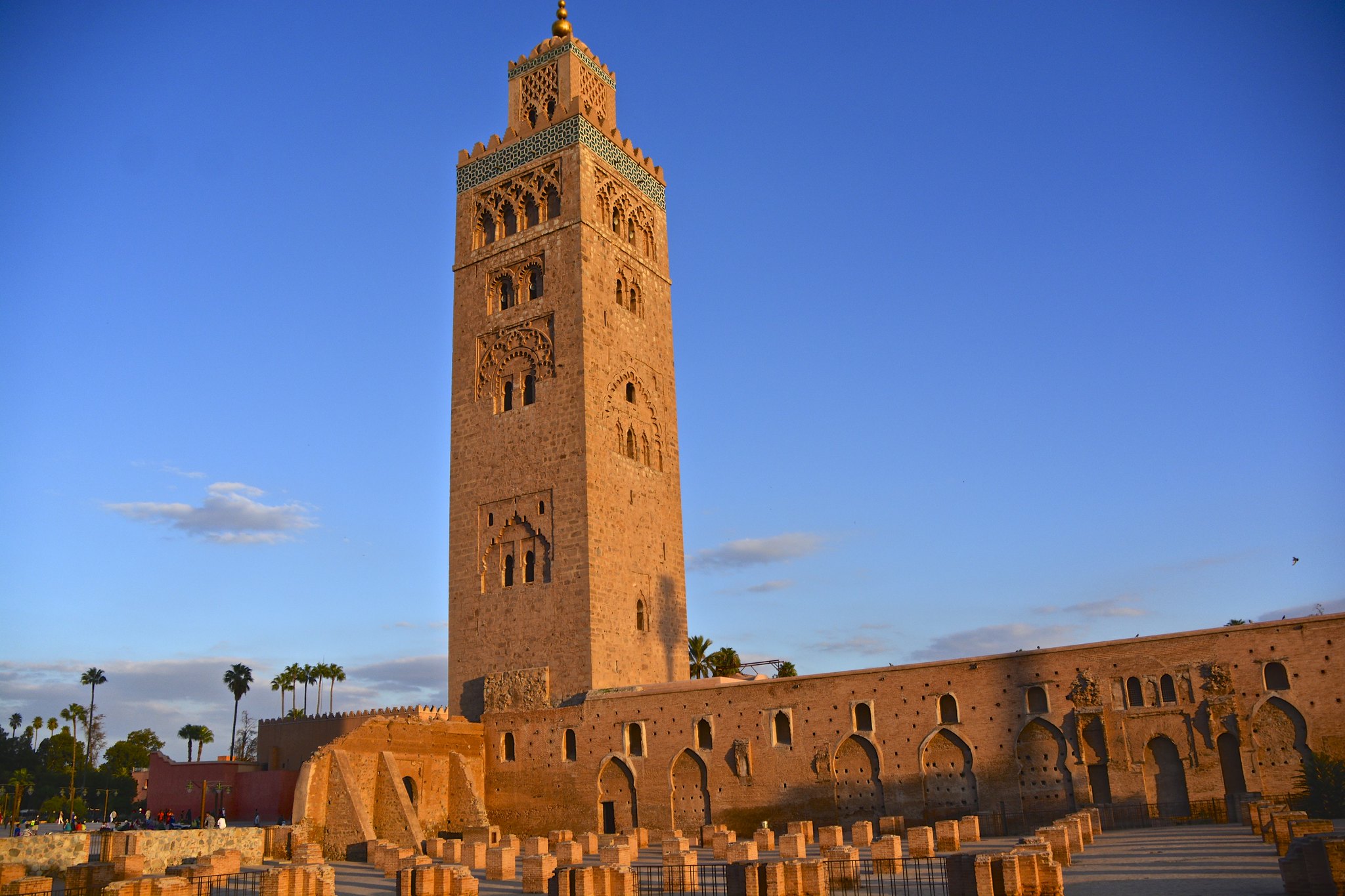
Marrakech’s skyline is dominated by the towering minaret of Koutoubia Mosque, a stunning example of Almohad architecture that has stood the test of time for over eight centuries. As you approach this magnificent structure, it’s impossible not to be awestruck by its sheer presence and the intricate details that adorn its exterior.
The mosque’s most striking feature is undoubtedly its minaret, which soars to a height of 77 meters (253 feet). This impressive tower serves as both a spiritual beacon and a practical landmark, visible from nearly every corner of the city. The minaret’s design is a testament to the ingenuity of medieval Islamic architects, featuring a unique square base that gradually tapers as it rises, creating an optical illusion of even greater height.
As you circle the mosque, you’ll notice the intricate geometric patterns that decorate its facades. These designs, known as zellij, are a hallmark of Moroccan architecture and showcase the incredible skill of local artisans. The patterns are created using tiny, hand-cut tiles in a variety of colors, primarily blues, greens, and earth tones, which are then meticulously arranged to form complex star-shaped motifs and interlocking designs.
Moving closer to the mosque’s entrance, your eyes are drawn to the ornate horseshoe arches that frame the doorways. These arches, another characteristic feature of Islamic architecture, are not only aesthetically pleasing but also serve a structural purpose by distributing the weight of the building more evenly. The arches are often adorned with intricate stucco work, featuring flowing calligraphy and floral motifs that seem to dance across the surface.
While non-Muslims are not permitted to enter the mosque itself, the exterior provides plenty of architectural wonders to admire. One such detail is the use of muqarnas, a type of ornamental vaulting that resembles a honeycomb or stalactites. These intricate three-dimensional structures can be found adorning the underside of arches and in the corners of the minaret, adding depth and visual interest to the overall design.
As you walk around the perimeter of the mosque, you’ll notice the subtle variations in the brickwork. The skilled masons who constructed Koutoubia used a technique called ablaq, alternating layers of different colored bricks to create a subtle striped effect. This not only adds visual interest but also helps to break up the massive walls, making the structure appear lighter and more elegant.
The mosque’s roof is another architectural marvel, featuring a series of green-tiled pyramids that add a splash of color to the otherwise earth-toned structure. These pyramids not only serve an aesthetic purpose but also help to channel rainwater away from the building, protecting it from water damage.
As the day progresses, the play of light and shadow across the mosque’s surfaces creates an ever-changing spectacle. The intricate carvings and geometric patterns cast mesmerizing shadows that shift and dance as the sun moves across the sky, bringing the building to life in a way that must be seen to be truly appreciated.
While Koutoubia Mosque may not be the largest or most ornate mosque in the world, its architectural details and historical significance make it a true gem of Islamic architecture. From its soaring minaret to the tiniest tile in its zellij patterns, every element of this magnificent structure tells a story of craftsmanship, devotion, and artistic expression that continues to inspire and captivate visitors from around the world.
The Koutoubia Mosque stands as an iconic symbol of Marrakech, Morocco, showcasing the pinnacle of Almohad architecture. Its towering minaret, intricate geometric designs, and historical significance have made it a enduring landmark for centuries. As the largest mosque in Marrakech, it continues to serve as a spiritual center for Muslims and a testament to the city’s rich cultural heritage. The mosque’s influence on Islamic architecture extends beyond Morocco, inspiring similar structures across North Africa and Spain. Today, the Koutoubia Mosque remains a must-see attraction for visitors, offering a glimpse into the artistic and religious traditions of medieval Islamic civilization while maintaining its role as an active place of worship.