
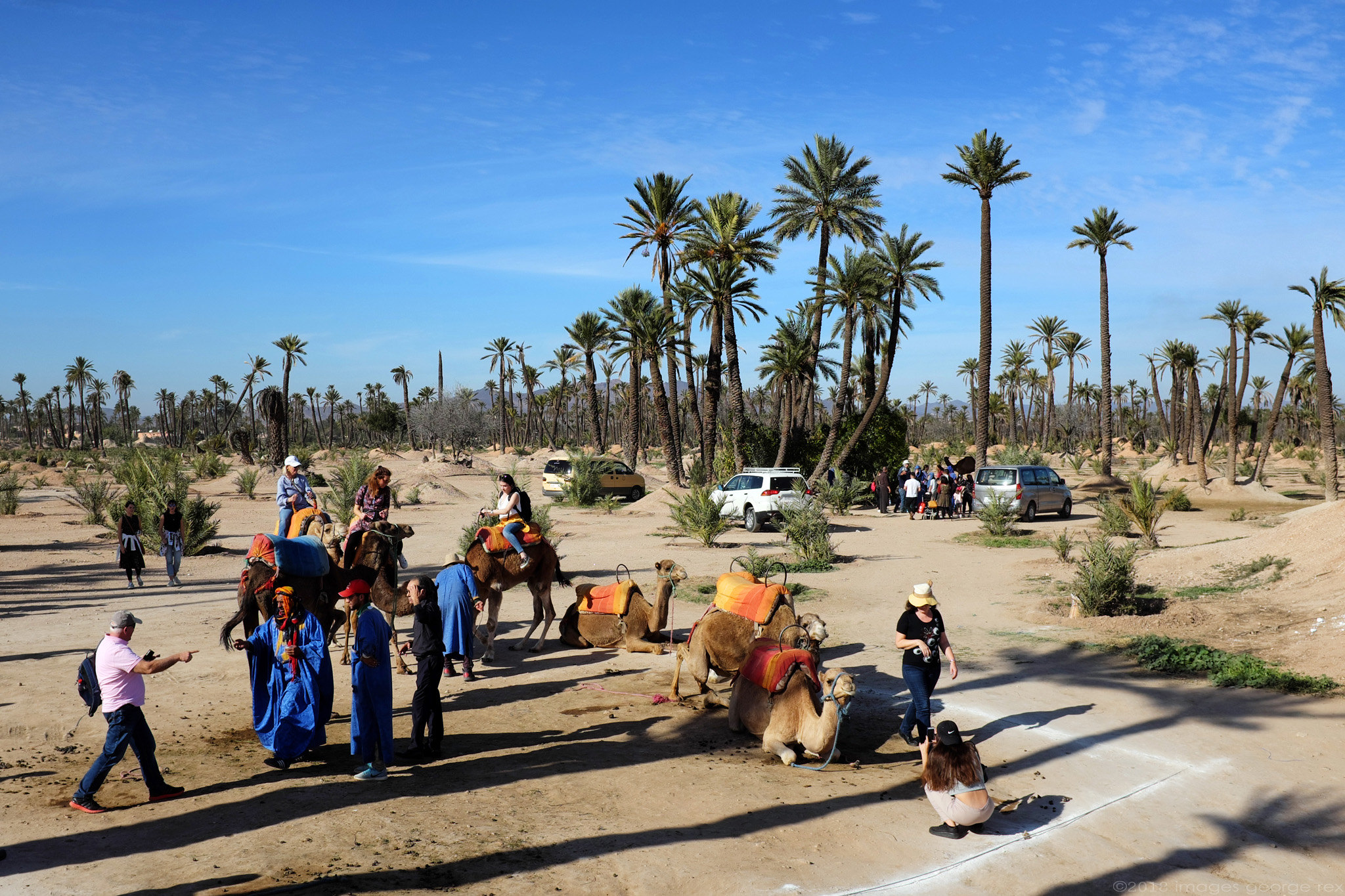
Nestled on the outskirts of Marrakech, the Palmeraie stands as a testament to nature’s resilience in the face of harsh desert conditions. This sprawling oasis, spanning over 54 square miles, is a verdant paradise that offers a stark contrast to the bustling medina and the arid landscape that surrounds it. With its estimated 100,000 palm trees, the Palmeraie has long been a source of fascination for visitors and locals alike.
As you venture into this green haven, the first thing that strikes you is the sudden drop in temperature. The dense canopy of palm fronds provides a natural respite from the scorching Moroccan sun, creating a microclimate that feels worlds apart from the city’s heat. The air is filled with the gentle rustling of leaves and the occasional chirping of birds, a soothing soundtrack that instantly transports you to a more tranquil state of mind.
The history of the Palmeraie dates back to the 11th century when the Almoravid dynasty ruled over Marrakech. Legend has it that the soldiers of this powerful empire would spit out date pits as they traveled, inadvertently planting the seeds for what would become this magnificent palm grove. Over the centuries, the Palmeraie has grown and thrived, becoming an integral part of Marrakech’s identity and economy.
Today, the Palmeraie is not just a natural wonder but also a playground for the rich and famous. Luxurious resorts and opulent villas are discreetly tucked away among the palms, offering visitors a taste of paradise. However, the true essence of the Palmeraie lies in its more humble corners, where traditional Berber villages still exist, and local farmers tend to their crops using age-old techniques.
One of the best ways to explore this lush oasis is on the back of a camel. As you sway gently atop these desert ships, you’ll get a unique perspective of the landscape. The slow pace allows you to fully absorb the sights, sounds, and smells of the Palmeraie. You might catch glimpses of local life – children playing in the shade of palm trees, women carrying baskets of freshly harvested dates, or farmers tending to their small plots of land.
For those seeking a more adventurous experience, quad biking tours offer an exhilarating way to cover more ground. As you zip through the dusty trails, the contrast between the rugged terrain and the lush greenery becomes even more apparent. It’s a thrilling reminder of the delicate balance between desert and oasis.
As the day winds down, the Palmeraie takes on a magical quality. The setting sun paints the sky in hues of orange and pink, casting long shadows across the grove. This is the perfect time to indulge in a traditional Moroccan tea ceremony. Sipping on sweet mint tea while watching the sun dip below the horizon is a moment of pure bliss that encapsulates the serene beauty of the Palmeraie.
Despite its proximity to the city, the Palmeraie feels like a world unto itself. It’s a place where time seems to slow down, allowing visitors to reconnect with nature and experience a slice of traditional Moroccan life. As development continues to encroach on this green oasis, efforts are being made to preserve its unique ecosystem and cultural heritage. For now, the Palmeraie remains a testament to the enduring allure of Morocco’s natural wonders, inviting travelers to lose themselves in its leafy embrace and discover the hidden treasures that lie beyond Marrakech’s famous red walls.
The Palmeraie of Marrakech stands as a vast oasis of palm groves, offering a stark contrast to the bustling city nearby. This historic area, spanning over 13,000 hectares, has been a UNESCO World Heritage site since 1985. It plays a crucial role in the region’s ecosystem, providing a natural barrier against desertification and supporting local agriculture. The Palmeraie also serves as a popular tourist destination, offering activities such as camel rides, golf courses, and luxury resorts. Despite facing challenges from urban development and water scarcity, efforts are being made to preserve this unique landscape, recognizing its cultural, environmental, and economic importance to Morocco.